

A. G. PETTET
A. G. Pettet is an Australian writer, editor and teacher whose work spans fiction, poetry, publishing and more than three decades of Australian literary culture.
Working from Queensland while maintaining an international outlook, Pettet has published in Australia, the United States, the United Kingdom, India, The Netherlands and Japan in journals and anthologies including Oxford Poetry, World Literature Today, Antipodes – the official journal of the American Association of Australasian Literary Studies, The Australian Poetry Anthology, Island Magazine, The Cortland Review, Going Down Swinging and Dazed & Confused.
He is represented by Australian Literary Management.
His writing has moved from the Beat-inflected poetry and experimental culture of 1990s Brisbane toward an increasingly restrained fiction concerned with memory, grief, moral consequence, damaged histories and the persistence of the past within ordinary life. This later work has developed into an approach which has been described as Haunted Realism.
THE WRITING
Pettet’s prose has become increasingly spare.
He favours direct language, compressed scenes, physical action and rhythmic sentences over extended explanation. Objects and places accumulate meaning through use rather than through declared symbolism, while silence often carries as much pressure as dialogue.
This restraint is central to Haunted Realism. The work leaves space between event and interpretation and allows contradictory possibilities to remain unresolved.
A coincidence can still feel uncanny. A place can feel occupied without containing anything supernatural. A person can understand what happened and remain uncertain about what it means.
Critic Nicholas Birns (New York University) has described Pettet’s writing as “concise, eloquent” and possessing “a pulse of its own.”
FICTION
Pettet’s recent fiction extends the concerns that have run through his poetry for decades: consequence, complicity, damaged intimacy, memory and the difficulty of telling the truth about oneself.
His short fiction has appeared internationally, including “Charlie” in Antipodes: A Global Journal of Australian/New Zealand Literature and “What Remains” in Verity La, alongside work in The Cortland Review, Retort Magazine and elsewhere.
The stories often begin with ordinary circumstances and allow them to shift under moral pressure. Rather than pursuing conventional redemption, they remain interested in what follows an irreversible act: what a person carries, what another person never learns, and what remains when explanation no longer provides relief.
His current fiction projects include the story collection What We Owe and the novel Broken Ground.
POETRY
Poetry provides the foundation of Pettet’s literary practice.
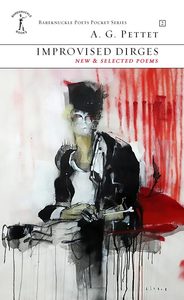
His first collection, Melancholy’s Midnight Wanderings, appeared in 1996. His second, Improvised Dirges: New & Selected Poems, was published by Bareknuckle Books in 2016.
His poetry has appeared in Oxford Poetry, World Literature Today, Antipodes, The Australian Poetry Anthology, Island, Going Down Swinging and numerous other publications in Australia and internationally.
The poems combine autobiographical intensity, urban observation, philosophical restlessness and a long engagement with Beat and post-Beat poetics. Yet many of the concerns that later shape Haunted Realism are already visible: memory attached to place, the emotional charge of ordinary objects and the sense that absence can alter the physical world. Brisbane repeatedly enters the work as more than a setting, streets, weather, bars, rooms, bodies and the physical pressure of the subtropical city become part of the rhythm of the writing itself.
Poet Robert Adamson described Pettet’s work as having “weight, dark humour” and was a “Poet to savour.”
HAUNTED REALISM
Haunted Realism begins with a recognisable world. Houses, roads, marriages, pubs, libraries, workplaces and stretches of country remain materially present and resistant to symbolism. Yet beneath that surface sits another pressure: what has happened before.
The haunting need not be supernatural. It can emerge through memory, guilt, grief, historical knowledge or an object whose meaning changes once its history becomes known. A landscape can become charged because of what occurred there. A room can alter because somebody is no longer in it. A document can disturb the present simply by surviving.
In Pettet’s fiction, these pressures are rarely explained away. Coincidence may remain coincidence. Memory may prove unreliable. An uncanny experience may have an entirely ordinary cause. The work allows uncertainty to remain without turning that uncertainty into spectacle.
Haunted Realism is therefore less concerned with whether ghosts exist than with the ways the past continues to occupy the present. Its central tension lies between what can be explained and what continues to exert emotional or moral force after explanation has run out.
BRISBANE / THE VISION AREA
Pettet belongs to a generation of writers who helped build much of their own literary infrastructure.
In 1998, with writer Brentley Frazer, he co-founded The Vision Area, a monthly event at Ric’s Bar in Fortitude Valley that ran until 2000. Part poetry reading, part performance, part art event and part culture jam, The Vision Area brought writers, musicians, artists and audiences into the same room at a time when Brisbane’s experimental literary community had few permanent spaces of its own.
Its significance lies partly in what followed. The networks surrounding The Vision Area fed into later journals, readings, publishing ventures and collaborations that became part of Brisbane’s literary underground through the 2000s and beyond. The idea was simple and has remained central to Pettet’s work ever since: literary culture does not appear by itself. Someone has to make the room.
QUEENSLAND POETRY FESTIVAL
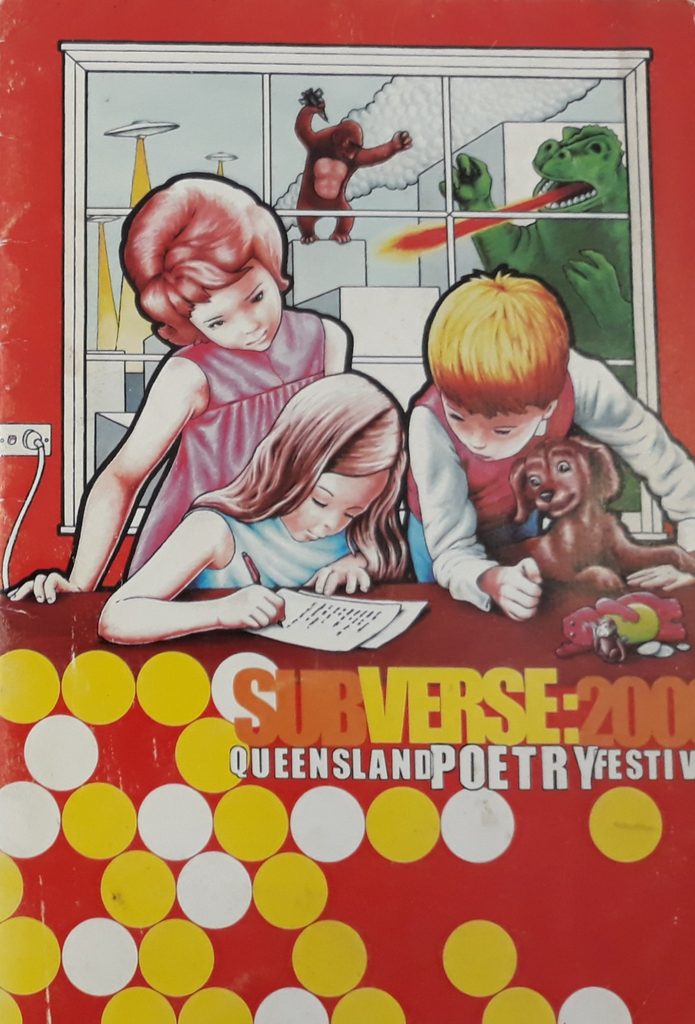
From 1997 to 2000 Pettet served as Assistant Director of the Queensland Poetry Festival, working across programming, visiting writers, media, exhibitions and events during an important period in the festival’s development.
His connections with Brisbane’s visual-art community, developed partly through his curatorial work with the contemporary art space Process, helped create stronger relationships between poetry and the city’s contemporary arts infrastructure, including the Institute of Modern Art. Where he was able to move the Festival to from a hired hall in West End. This established the continued hosting of the festival at The Judith Wright Centre where the IMA became housed.
The work reflected an interest that has persisted throughout his career: breaking down the artificial distinctions between literary culture, performance, visual art and everyday public life.
Pettet has subsequently performed, chaired conversations and appeared on panels at events including Brisbane Writers Festival, the National Young Writers Festival and Queensland Poetry Festival.
BAREKNUCKLE
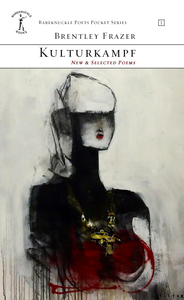
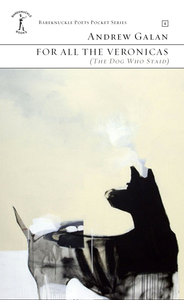
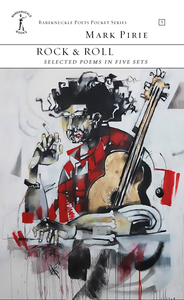
Pettet later co-founded Bareknuckle Books, again with Brentley Frazer, and worked as its senior editor.
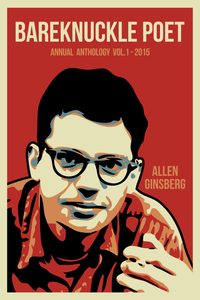
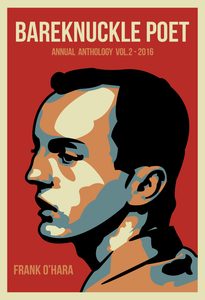
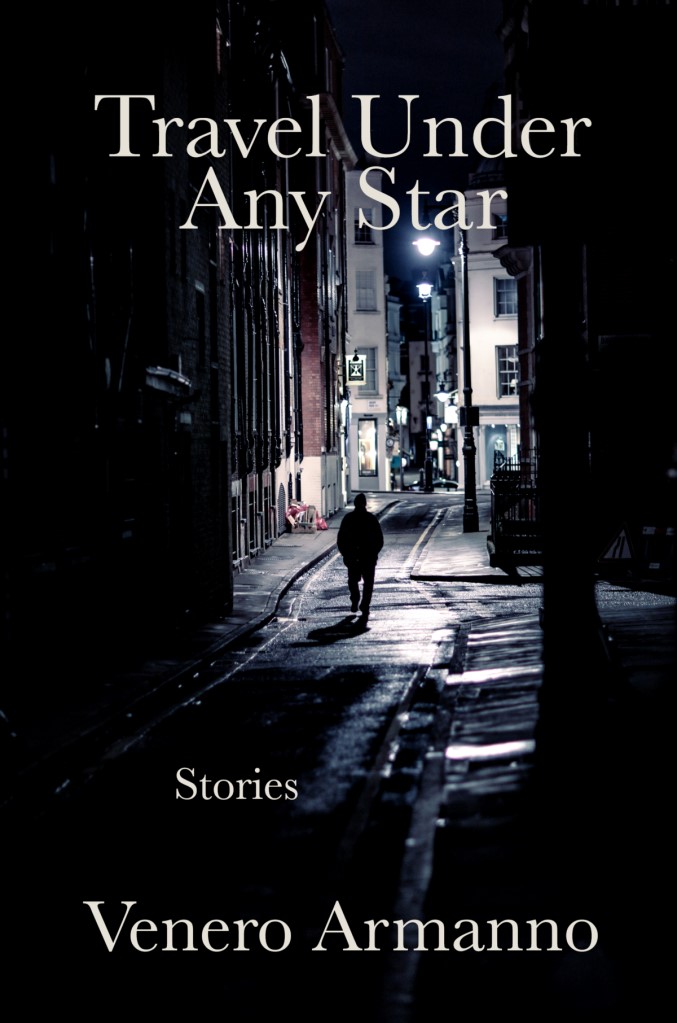
The press published four poetry collections, two annual anthologies and Travel Under Any Star, a collection of short fiction by award-winning Australian novelist Venero Armanno.
The Bareknuckle Poet Annual Anthology Volume 001 was selected among The Australian‘s Best Books of 2015.
For Pettet, independent publishing formed an extension of writing itself: finding work, editing it closely, producing the physical book and creating a route between writers and readers outside the larger commercial houses. The associated Bareknuckle Poet Journal of Letters was selected for preservation by the National Library of Australia’s PANDORA Archive, placing the journal within the permanent record of Australian digital publishing.
BOOKS / THE BOOK TRADE
Pettet’s relationship with literature has never existed solely on the writer’s side of the desk.
Across more than two decades in the book trade he has worked as a bookseller, store manager, receivals manager, sales representative, publisher liaison, data manager and author-event coordinator in independent and chain bookshops. His working life has included McGills, TITLE, Folio Books, Dymocks, the State Library of Queensland bookshop and The Book Merchant Jenkins.
At the State Library of Queensland he also worked in conservation and bindery, repairing, stitching and hand-binding books from the library’s collections. That experience, writing books, selling them, editing them, binding them, preserving them and teaching others how they reach readers, has produced a view of literature grounded in its complete ecology rather than simply authorship.
Books exist as ideas, but they also exist as objects that must be made, moved, protected, sold, shelved and read.
TEACHING
Pettet has taught Creative Writing at both Griffith University and the University of Queensland, including poetry, literary fiction and publishing.
At Griffith he has taught Publishing in the Marketplace, bringing together creative practice with the less romantic but essential mechanics of the literary world: editing, publishing, bookselling, distribution, audiences and the movement of a manuscript into public life. The teaching continues a principle evident throughout his career, that literary knowledge gains value when it moves between people.
Writing may begin alone. Literature does not.
THE BEATS
Pettet has studied the Beat Generation for much of his adult life and is a member of the European Beat Studies Network.
The interest reaches beyond literary influence into history, bibliography, cultural networks and the ways movements form outside established institutions.
In 2015 he coordinated the international 60th anniversary of Allen Ginsberg’s Howl and the Six Gallery Reading, connecting events in Brisbane, Sydney, Melbourne, Launceston, London, Paris, Boulder and New York.
Beat poetics remain one strand within his writing rather than an exercise in revivalism: spontaneity, candour, rhythm, movement, lived experience and a suspicion of overly protected literary language brought into a distinctly Australian landscape.
ASIA–PACIFIC
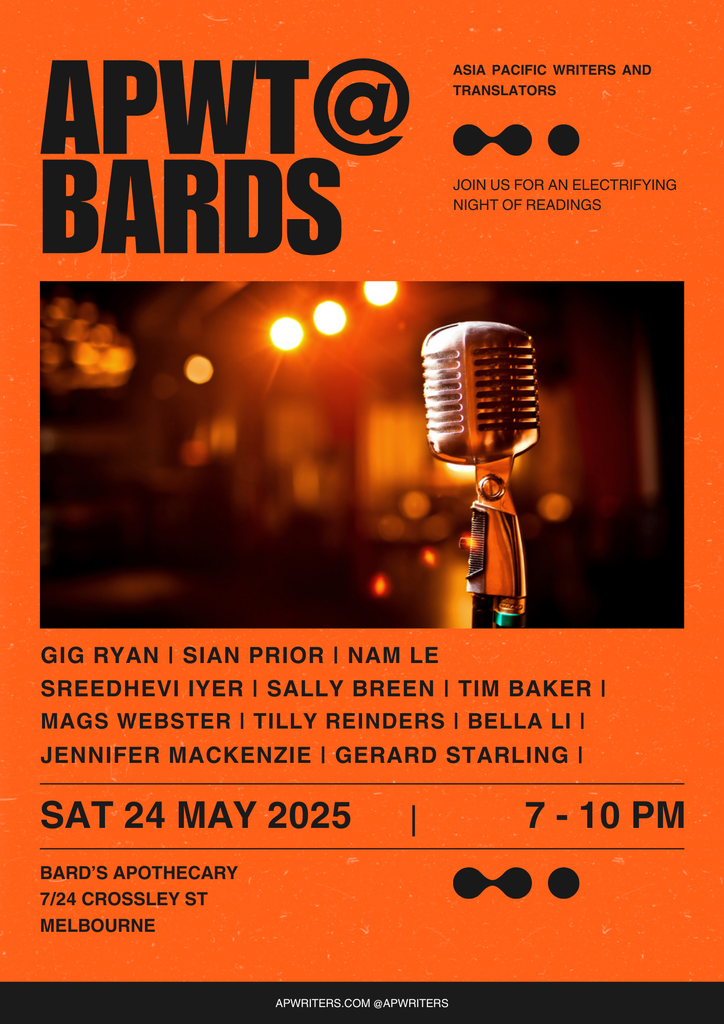
Pettet recently served as Secretary of Asia Pacific Writers and Translators Inc. (APWT), working across communications, content, events and the organisation’s international literary network.
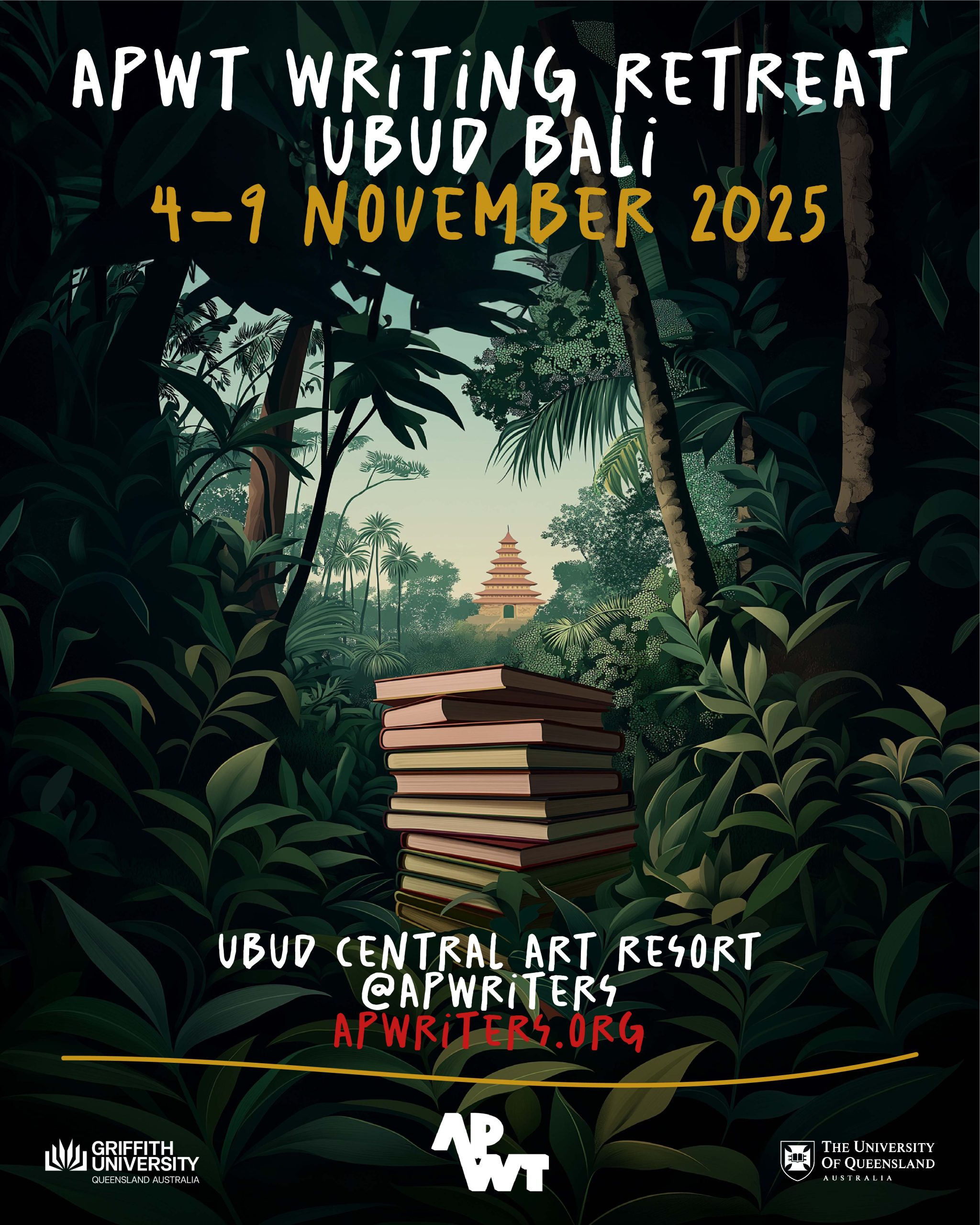
APWT brings together writers, translators, editors, publishers and scholars across the Asia-Pacific and beyond. Pettet assisted in the coordination of its 2024 ‘Heart Water Thailand’ Summit in Chiang Mai and the 6 day Asia Pacific Writer and Translators Retreat in Ubud, Bali, in 2025. The role extends a pattern present from the earliest stages of his career: connecting writers who might otherwise remain separated by geography, institutions or literary scenes.
It also reflects his longstanding conviction that Australian literature makes most sense when understood as part of a larger international conversation.

A CONNECTIVE FIGURE
It can be difficult to separate the different parts of Pettet’s career because they continually feed into one another.
The poet becomes an editor.
The bookseller becomes a publisher.
The conservator becomes a teacher.
The organiser becomes the writer standing at the edge of the room listening to somebody else read.
From The Vision Area and Queensland Poetry Festival to Bareknuckle Books, university teaching and Asia Pacific Writers and Translators, Pettet’s career has involved both making literature and helping construct the conditions in which literature can happen.
That connective work has been particularly bound to Brisbane and Queensland, while the writing itself has increasingly moved outward, through the United States, Britain, Europe and the Asia-Pacific.
The common element remains the page.
What survives there.
What refuses to disappear.
What we owe to the people whose stories pass through our hands.
“Adam Pettet is a noted and talented poet as well as being one of the foremost worldwide historians of the Beat Generation.
Australian poets have often seen experimentation alone as making them global, or as cosmopolitanism alone making them experimental, Pettet is aware that one has to be both, on more or less separate axes, and then braid those two tendencies into an articulated whole.
Pettet has not only done this but has crystallized these tendencies into an art that is concise, eloquent, and has the self-belief of a poetry that is not just lyricized discursivity but has a pulse of its own.
Pettet’s writing recalls us (as Christopher Brennan might put it) to the source of poetry, in deep feeling and an insistence that the precision of words makes us think in a distinctly poetic but nonetheless cerebral way. Of Pettet’s generation, I think David Musgrave and Felicity Plunkett are achieving these effects as well, although Pettet does the job with particular economy and conviction.”
– Nicholas Birns (New York University) Author of ‘Contemporary Australian Literature: A World Not Yet Dead’